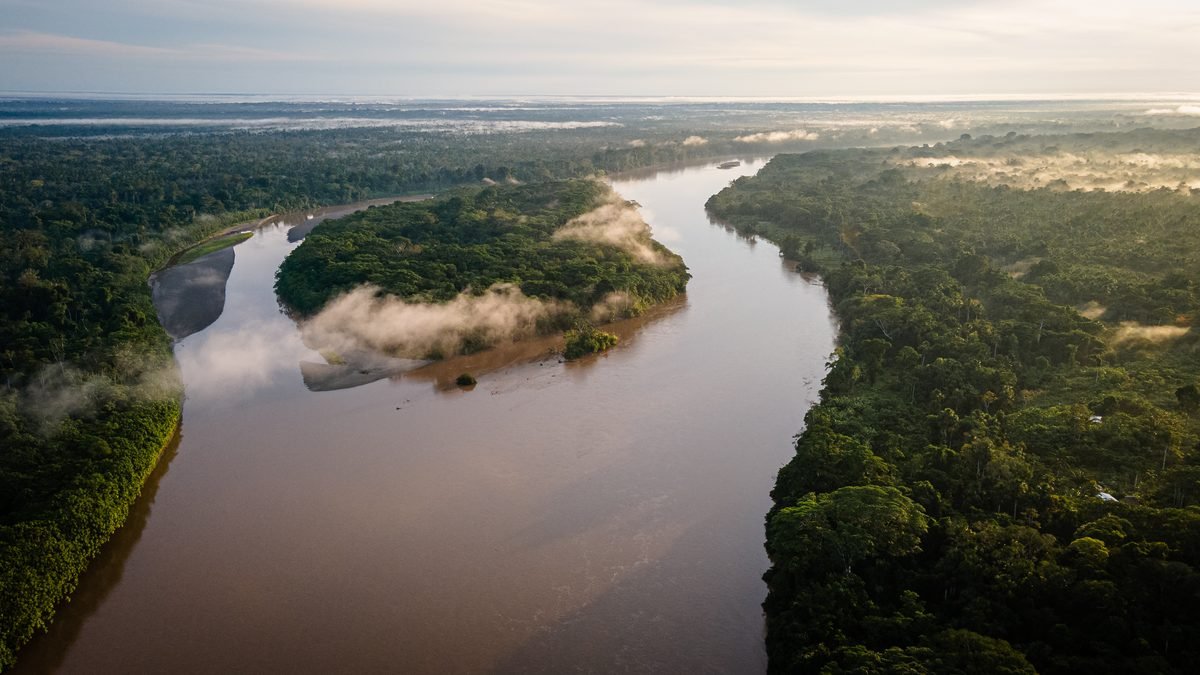
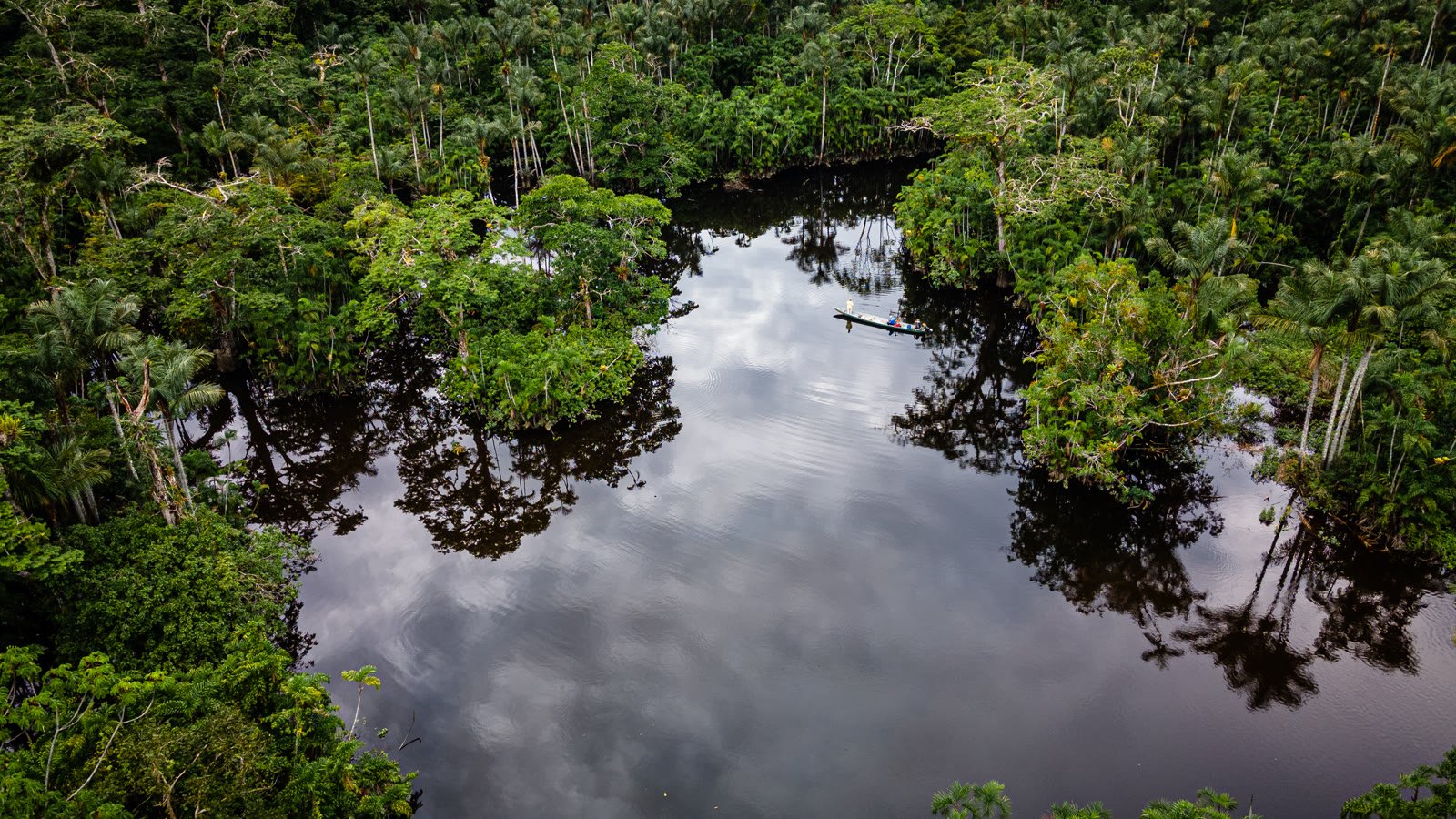
The Cuyabeno Wildlife Reserve at dawn, Ecuadorian Amazon
Private Expeditions • By Application

The Amazon that startswhere every other trip ends.

There is a five-hour boat ride at the end of the road in eastern Ecuador. At most a dozen travellers a month reach what lies past it — and we bring more than 60% of them. Designed once, for you, and never repeated.

Two minutes • Francis reads every application personally • a reply within 24 to 72 hours

175,000

Hectares of ancestral territory

5–13 h

Deeper than the road

60%

Indigenous-owned

5.0★

Google — every review

Where this actually is

The Cuyabeno Wildlife Reserve is six hundred thousand hectares. Nearly all of its tourism happens in the corner nearest the road, because that corner is cheap to run.

Thousands of visitors a year go into one short circuit and photograph animals that know exactly what a boat full of people means. That is a real place, and it is not the one you have been imagining.

Most people do this once. One window in a life, one set of photographs, one memory of somewhere they had been imagining since they were a child. It is worth knowing how far past that corner you can actually go.

0 h
Tierras Orientales river port — the road ends
5 h
Tukunari Lodge — our base
8 h
Lagartococha — the Peruvian border wetlands
11 h
Garzacocha
13 h
Aguas Blancas — the deepest grounds we use

The further out you go, the less of everything human there is — less traffic on the water, fewer lodges, less noise, less impact. What you get in exchange is density. More animals, and a forest that is genuinely intact rather than merely green. That is a function of distance, and it cannot be built closer in.

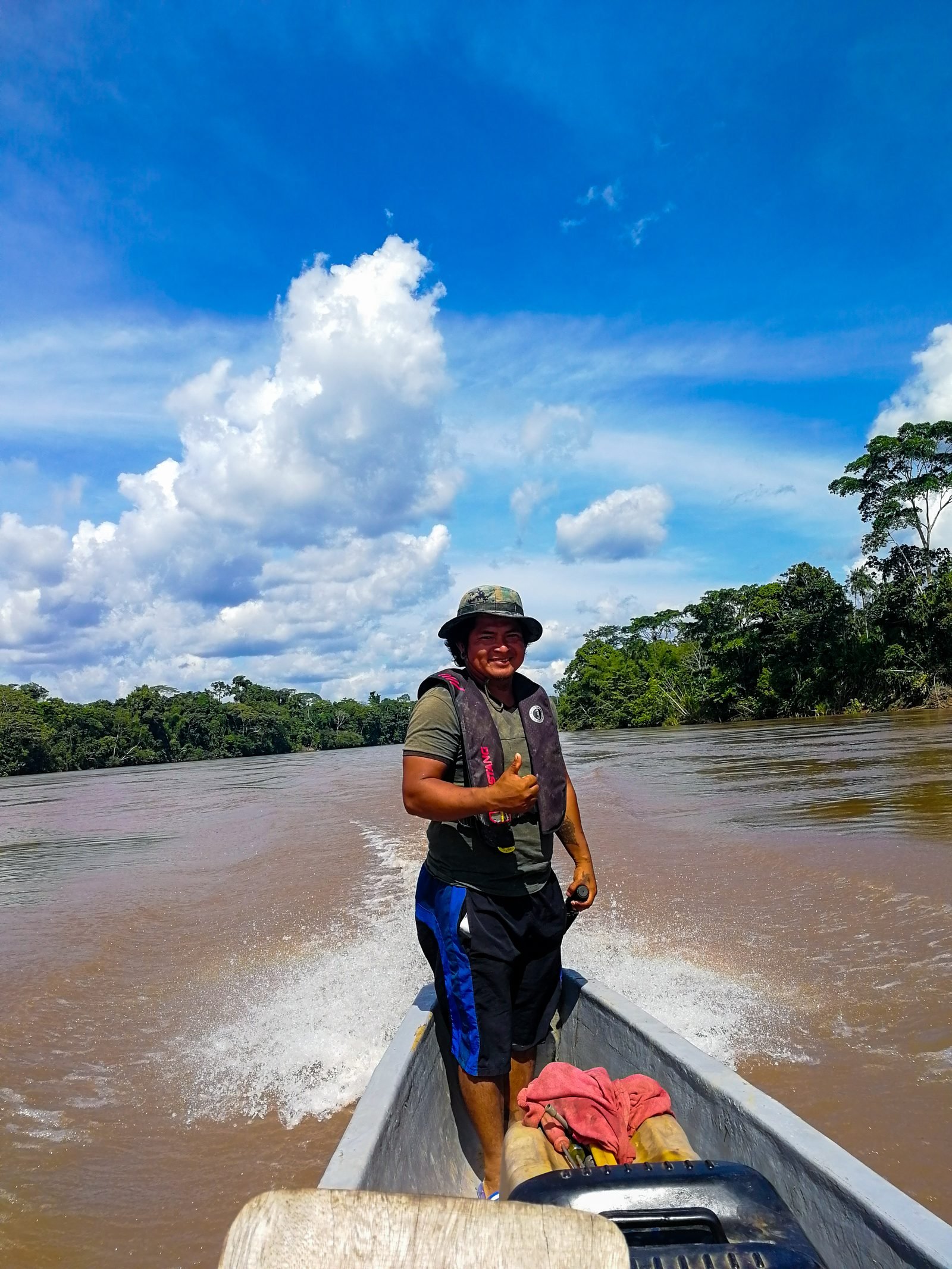
A community boatman on the Aguarico river
80% of our staff are community members
Why this is possible at all

A company the founder does not control.

Francis Boily has spent twelve years living and guiding in this part of the Ecuadorian Amazon. He is the minority partner.

Two things sit underneath that. A twelve-year alliance with the Zancudococha community. And a partnership with the Moya family — a Kichwa-Shuar family of that community — who own 60% of Travel the Amazon, on their own ancestral territory.

Around 80% of our staff are community members, on fair wages, and part of what you pay stays in the community. The family is directly involved in conservation projects on the same ground you will be walking.

That is not a credential. It is the mechanism — and it is also the conservation argument.

Indigenous communities are part of the modern economic system now, but there are very few ways to earn money inside the rainforest. The usual ones mean selling what can be extracted: lumber, fish, bushmeat. Tourism done properly makes the forest worth more alive, thriving and standing than cut down — and it puts that value on the market, where it can compete.

Being genuinely fair-trade and sustainable as a business is not a badge on the side of this. It is the core of what keeps this place intact for the decades to come.
The depth gradient

Why this cannot be copied

Four things, and none of them are marketing.

One

Distance

175,000 ha · 5 → 8 → 11 → 13 hours

Ancestral territory reaching the Peruvian border — the largest held by a single community in the Ecuadorian Amazon. Almost no human traffic reaches it, which is exactly why the wildlife density is what it is.

Two

The family

12-year alliance · 60% owners

Knowing which channels are passable at which water level, and which lagoon the otters are working this month. That knowledge is the only thing that lets a route be pushed to the edge of what is possible.

Three

Reserved

the area is yours

We make the arrangements, and for the days you are out there the place is genuinely yours. Not a claim about who is allowed where — a booking, made on your behalf.

Four

The blank page

designed once, never repeated

There is no private itinerary in a drawer waiting for a buyer. Yours starts empty and is built backwards from what you came for, around the water and the season.

One day, so this stops being abstract

The day most guests
remember first.

And the one they have the hardest time describing afterwards. Every expedition is different — this is what a single day on the Zancudococha route can hold.

Before dawn
Guayusa tea with an elder of the family — usually the mother, nearly seventy, who has watched the whole modern world arrive here in a single lifetime. Dugout canoe to smartphone. Her stories are irreplaceable, and they are not a performance.
Morning
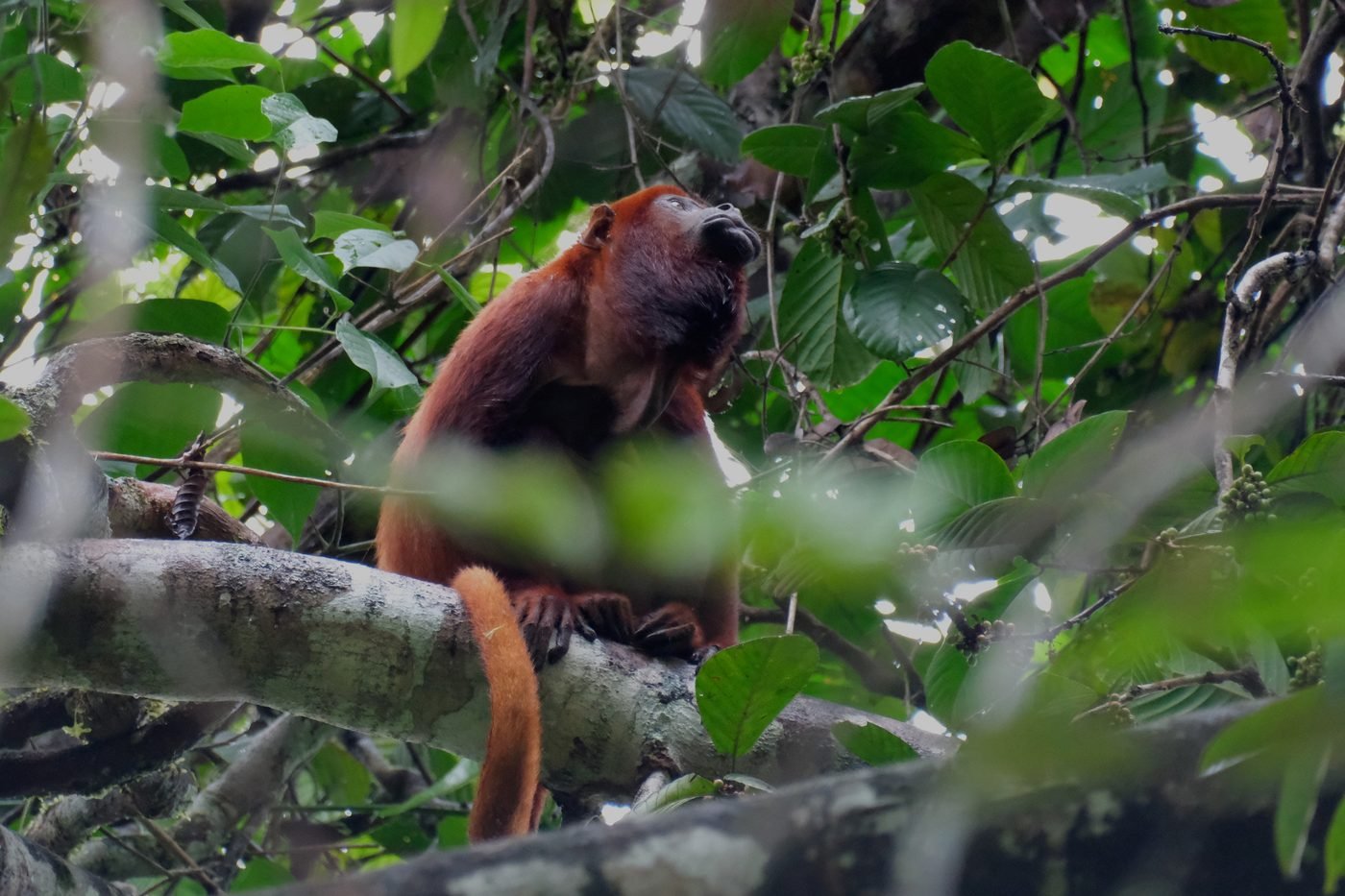
Three hours through forest with no maintained trail in it, tracking primates, to Zancudococha — the largest permanent lagoon in the Ecuadorian Amazon.
Afternoon
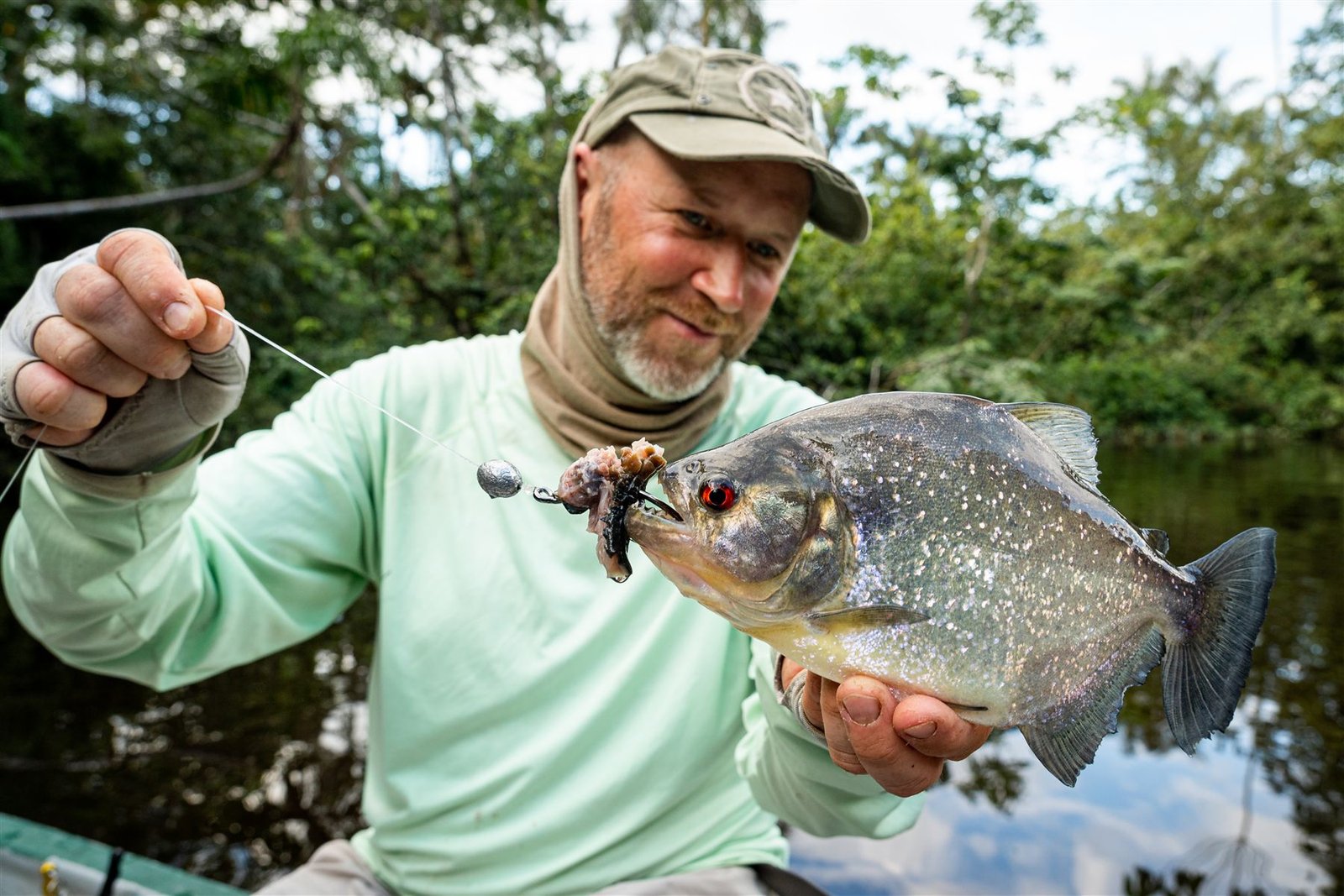
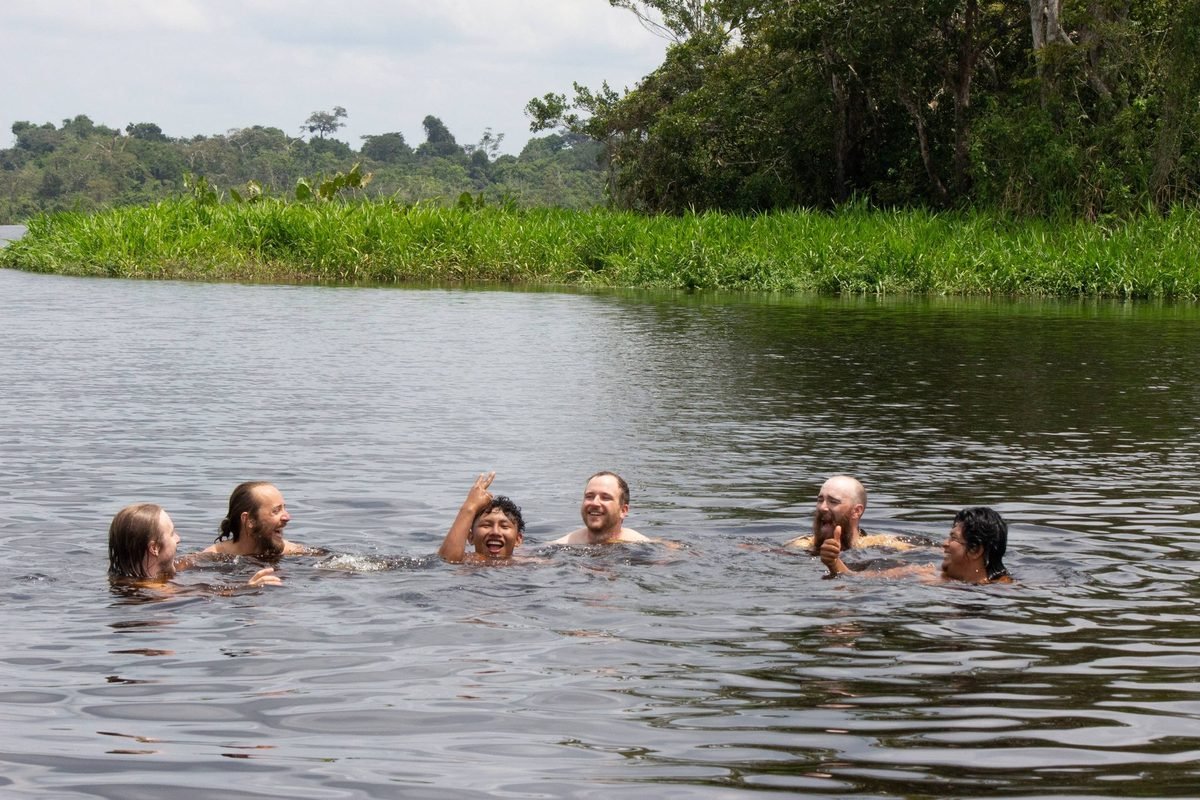
You fish piranha with a stick, a line and a piece of meat. No equipment, no experience, and the first strike always startles somebody. Then you swim in the same water — which takes most groups about a minute to agree to and ten seconds to stop thinking about. Lunch is what you caught, cooked on the shore, eaten with the guides and the family.
After dinner
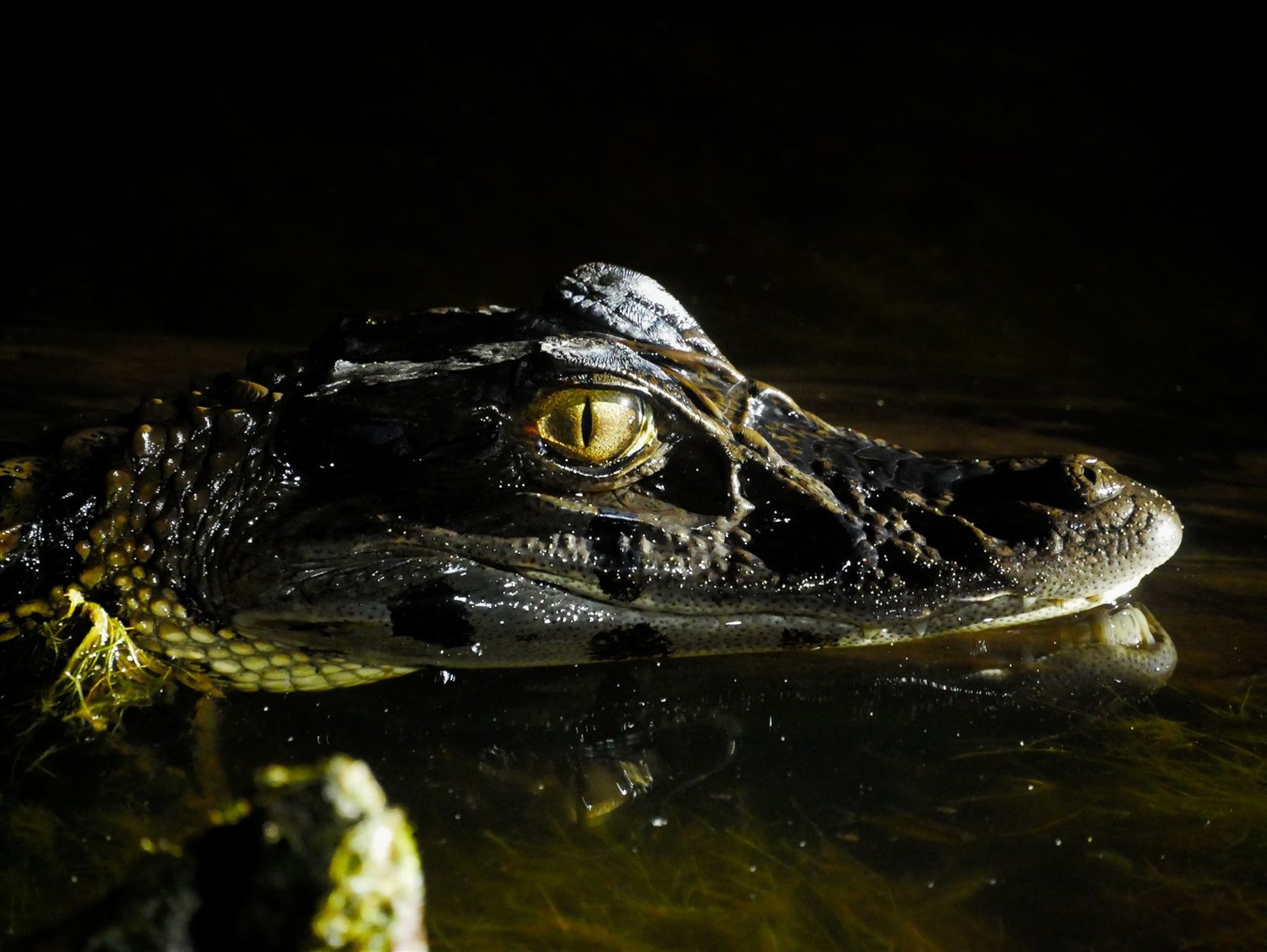
Back out onto the lagoon in the dark. The guide sweeps a torch across the surface and the eyes come back at you — low orange points sitting just above the waterline.
The return
You drop out of the lagoon into the Zancudococha river — narrow, winding, closed over by forest — and run it in complete darkness, flashlights finding the next bend a few seconds before you take it. Frogs on both banks the whole way, insects in the beam. And every so often something heavy shifts in the water beside the canoe, and nobody ever finds out what.
The same day, in pictures

Dawn to the night river.

Eight frames, in the order they happen. Four of these have to be photographed on the next expedition — they are marked, and they are the ones worth waiting for.

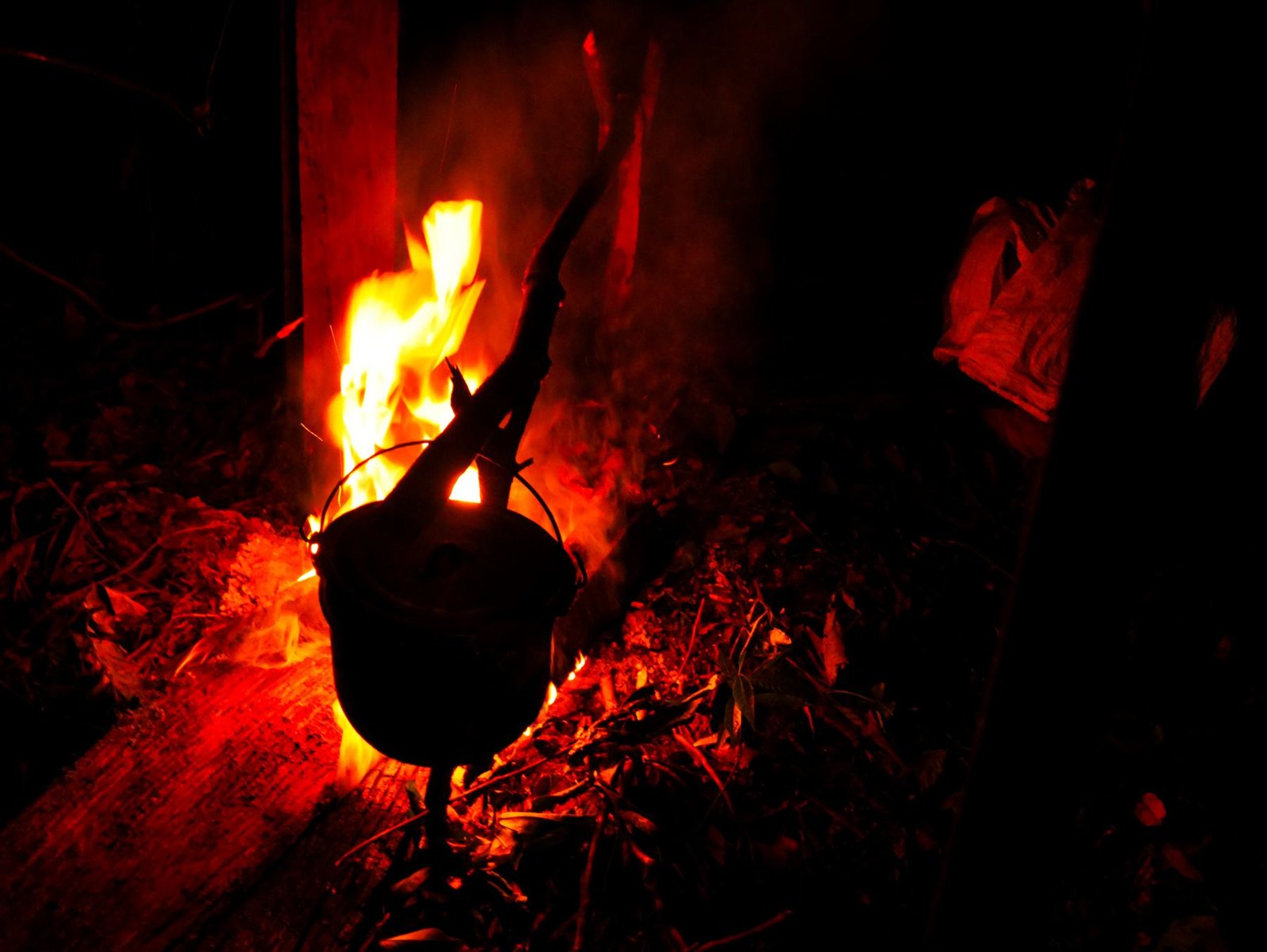
To photograph Pre-dawn guayusa with the elder — firelight only, her hands and face, steam off the cup. /media/private/01-guayusa.jpg
Forest trail deep in the territory
MorningThree hours through unmaintained forest
Aerial view over the lagoon system
MiddayZancudococha — the largest permanent lagoon in the Ecuadorian Amazon
To photograph The piranha strike — the stick, the line, and somebody laughing. /media/private/04-piranha.jpg
Guests swimming in the lagoon
AfternoonSwimming in the same water
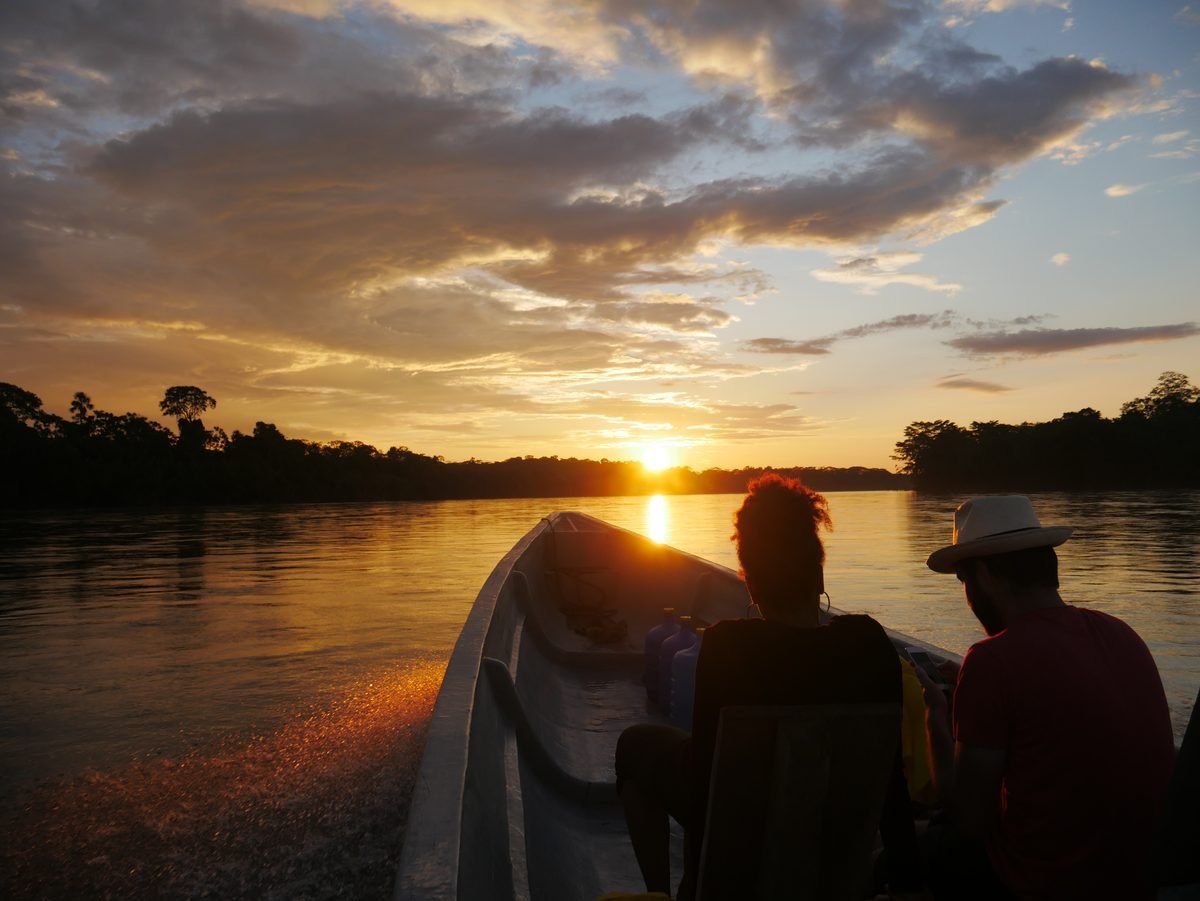
Sunset over the territory
DuskThe light going off the water
To photograph Torchlight across the lagoon — caiman eyes at the waterline. Held wide, no zoom. /media/private/07-caimans.jpg
To photograph — priority 1 The night river. Bow POV, flashlight beam, the next bend arriving late. If one frame gets made this year, this is it. /media/private/08-night-river.jpg

More from the territory in the full gallery.

From the moment you land in Coca

Everything is handled.

We are not a five-star resort. We are something much rarer: the real, untouched jungle, with everything taken care of.

Included

  • Private ground transport — Coca to the river port
  • Private motorized canoe, five hours into the reserve
  • Tukunari Lodge — chalets, real beds, mosquito nets, private bathrooms
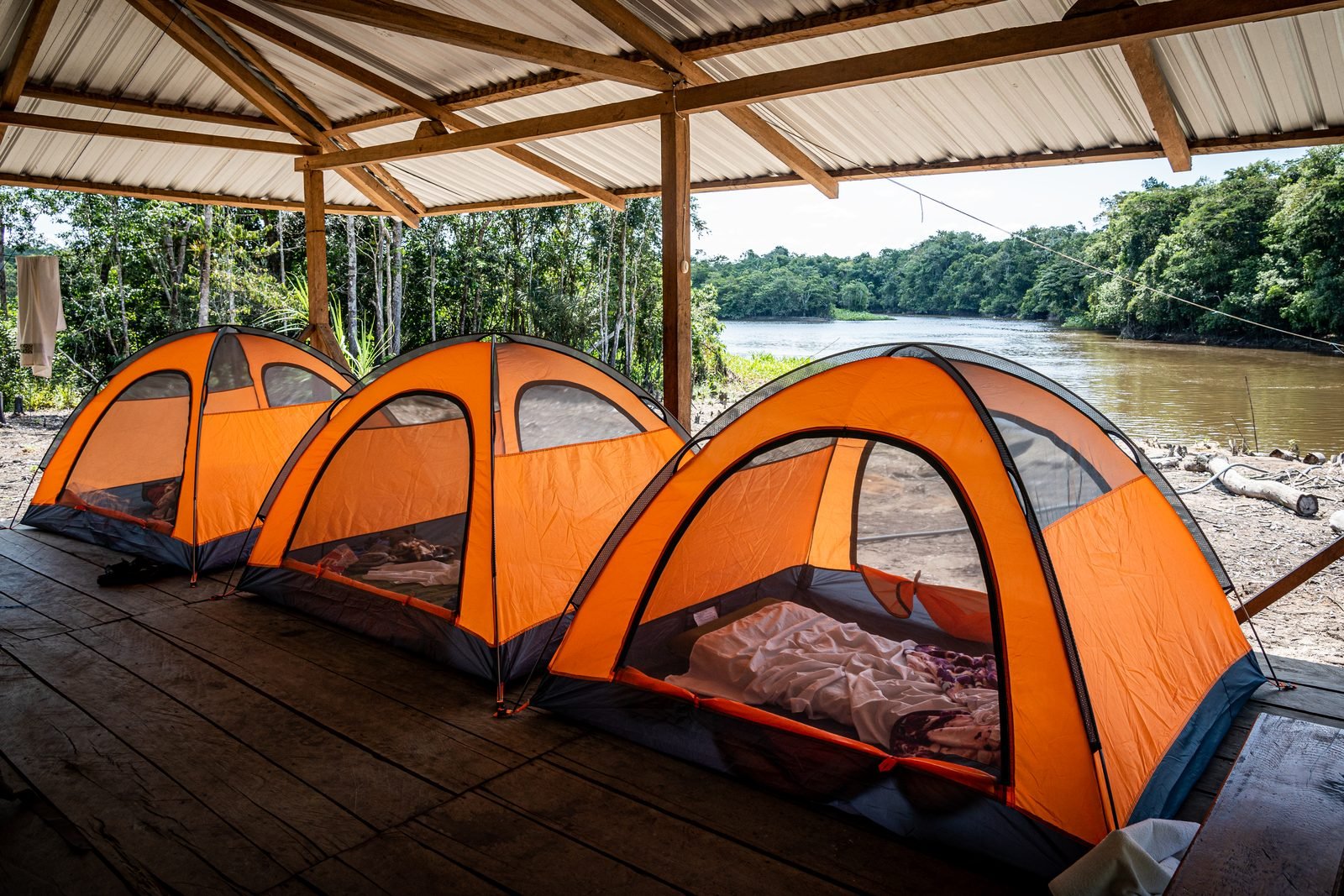
  • Deep-jungle camps — tents on proper mattresses, toilet, shower, kitchen
  • Every meal, cooked by a cook who travels with you, and purified water
  • A bilingual specialist guide and a community guide born on this river
  • All field equipment — rubber boots, ponchos, tents, life jackets
  • All fuel, all river transport, rowing canoes
  • Reserve and community fees
  • Satellite comms with every guide; Starlink at the lodge
  • A route designed for you and run once

You bring one soft bag, under 15 kg. That is your entire responsibility.

Not included

  • International flights, and the Quito–Coca flight (bookable on request)
  • Travel insurance — highly recommended, and it should cover medical care, evacuation and adventure activities
  • Alcohol and souvenirs
  • Tips, which are discretionary and shared among the team

Good to know

  • Active but not athletic — walks of one to three hours, hours in a canoe, heat and humidity
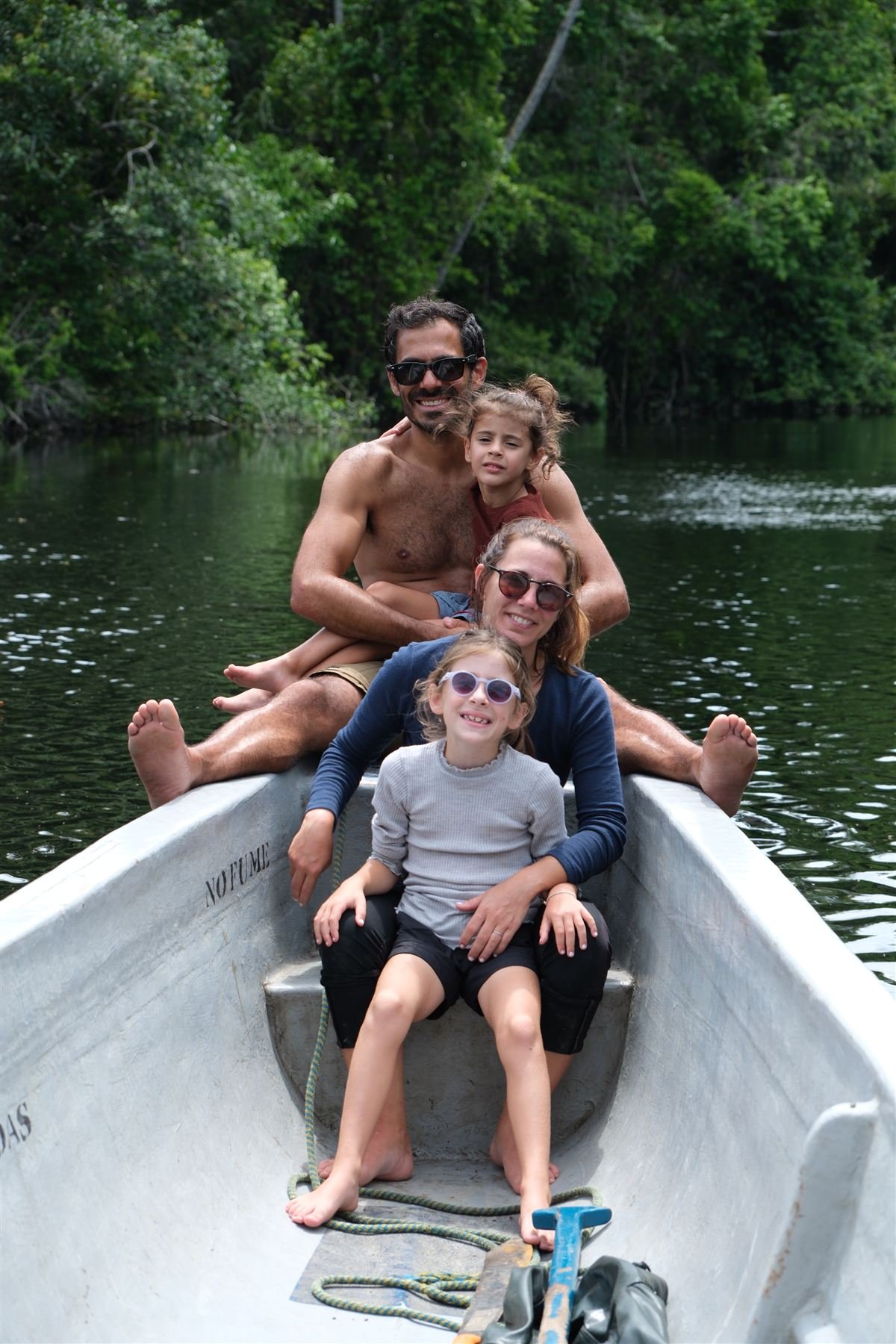
  • No minimum age on private expeditions. Children come, and they do fine
  • Group size is yours to set. Most private groups run two to six; retreats, corporate and academic or research groups are quoted case by case. We will tell you honestly where a larger group changes what a route can do
  • We run at most one group a week on the territory — a conservation decision, and the reason a date, once it is yours, is genuinely gone
  • Dietary needs handled with advance notice
The part most companies leave out

What you will see —
and what we will not promise.

This is one of the most biodiverse places on Earth and it is teeming. The question is never whether you will see wildlife. It is how much, and what the forest decides to hand you.

On every departure

Seen every single time
  • Monkeys
  • Pink river dolphins
  • Caimans
  • Macaws
  • Hoatzin
  • Amphibians
  • Piranhas
  • Birds in abundance
  • Insects
  • Signs of mammals — tracks, foraging, beds

Possible, never promised

Depends on conditions and luck
  • Giant river otters
  • Green anaconda
  • Emerald tree boa
  • Capybara
  • Tapir
  • River turtles
  • Grey dolphins
  • Harpy eagle
  • Manatee
  • Bushmaster
  • Peccaries
  • Tortoises
  • Felines

Wild animals do not keep appointments, and anyone who guarantees you one is doing it to close a sale. What we will do instead is give you your real odds for the month you are considering — including when the answer is “come a different month,” or “we are not the right operator for what you want.” We have said both.

“We did not see a single other tourist.”
Laurent M. — Google review, travelling with his children, 10 and 11½

Read every review on Google →

5.0★Google — every review
2014Operating since
PerfectSafety record, over a decade
60%+Of everyone who enters this area
Two things about timing

A week is enough.
A year is more common.

We run at most one group a week on the territory — a conservation decision before it is anything else. A private expedition takes the whole base and the whole team, so while yours is running we run nothing else, and a date, once it is yours, is gone. Most people who travel with us are booking six to eighteen months out, and the good windows go early.

The second one surprises people. If a window opens up in your life and you want to move quickly, tell us. We have put private expeditions together on about a week’s notice. The heavier the logistics, the more warning we need — but the answer is rarely no.

What cannot be rushed is the water. High water runs roughly April to July: flooded forest, paddling through the canopy. Low water runs roughly August to March: firm trails and concentrated aquatic life. What is possible in April is not what is possible in October — and that is a conversation, not a form.

The Lagartococha deep-jungle camp
Lagartococha platform8 hours deeper
Before you apply

The honest answers.

How fit do I need to be?

Active, but not athletic. Walks of one to three hours on muddy trails, hours in a canoe, heat and high humidity. No technical skill is needed. If you can walk for a few hours and you are curious, you can do this.

Is it safe out there?

We have operated since 2014 with a perfect safety record. Life jackets on the water, and every guide carries satellite communications. Travel insurance covering medical care, evacuation and adventure activities is required.

On health: malaria risk in this area is considered low, but we never give medical advice — speak to a travel-medicine clinic before you come.

Can I bring my children?

Yes. Private expeditions have no minimum age, and families are some of our best guests. The review at the top of this page came from a father travelling with a ten-year-old and an eleven-year-old.

What if we do not see much?

Monkeys, pink dolphins, caimans, macaws, hoatzin, amphibians and piranhas appear on every departure. Otters, anaconda, boas and the larger land mammals are possibilities, not promises.

We will not attach a guarantee to a wild animal. What we will do is tell you your honest odds for your month, before you book.

How far ahead should we book?

Most guests book six to eighteen months out, and specific dates do get taken. But a private expedition can be assembled on about a week’s notice if the logistics are straightforward. If your window is short, ask — the answer is rarely no.

Why does this cost more than other Amazon trips?

Indigenous people are part of the modern economic system now. There are no job opportunities in the jungle, but money is still needed — for tools, boats, school, food. The only other way to get it is by extracting resources: lumber, fish, bushmeat, sold commercially.

If we do not offer fair arrangements and fair wages, the ones who pay for it are the local people and the forest. The cheapest tours are cheap because somebody else absorbs the cost. Tourism should be a solution for conservation and for indigenous communities, not a business that takes advantage of them.

What happens if I need to cancel?

Cancel 60 or more days before departure and you are refunded in full, less transaction fees. The full ladder is published on our reservation and cancellation policy page — read it before you talk to us, not after.

Payment is 50% at reservation, with the balance due at the latest 30 days before departure.

What does a private expedition cost?

We cannot publish a price for a trip that does not exist yet. Duration, group size, route and season all move it, and a private expedition is built from a blank page.

The application asks your budget per person. Answer it honestly — it is how we can tell you the truth quickly instead of wasting your time.

What happens next

Three steps, and no sales sequence.

A short application

About two minutes. When you are thinking of travelling, who is coming, the one thing you most want out of it, and your budget per person.

A personal email

Francis reads every application himself. You will have a reply within 24 to 72 hours — a real one, not an automated assessment.

A call

If this is something we can do properly, that email invites you to a conversation where the route gets designed. Before anybody talks about money.

Tell us what you came for.

If it is not something we can do properly, we will say so and point you somewhere better. That is the whole process — no sales sequence, no automated follow-up.

Apply for a private expedition →

Two minutes • no obligation • a personal reply within 24 to 72 hours

Not ready yet? Read the Google reviews first, or the full FAQ — then come back.

Designed once, for you, and never repeated By application · a personal reply within 24 to 72 hours
Apply now →